Modern AI tools can help evaluate a security product's strategy, but only if they have the right criteria. An MCP server with domain-specific frameworks gives your AI agent the practitioner knowledge to test strategic fit, evaluate competitors, and assess vendor viability.

AI agents, with the right guidance, can catch strategic contradictions, separate verified facts from marketing claims, and stress-test key assumptions. Point yours at my MCP server to give it access to product strategy frameworks that generic AI doesn’t have. Whether you’re building your own product, evaluating a startup vendor, or sizing up competitors, the frameworks adapt to your context.
It incorporates my guide to creating cybersecurity products and insights I’ve published over the years as a builder and consumer of cybersecurity products. Your AI agent applies this practitioner knowledge to what it knows about the company, stage, and market.
A Layer on Top of Generic AI
Ask a generic AI to review a product strategy and you’ll get textbook advice. “Consider the target market. Review the revenue model.” It won’t catch that your $7,200/yr deal size contradicts the Fortune 500 sales motion, or that per-seat pricing undervalues security products when small teams protect large asset inventories.
When you guide the AI tool with specific criteria, expectations, and templates, it identifies such contradictions. The AI tests whether the pricing, positioning, go-to-market, and trust readiness actually support each other. That guided approach also adjusts to the company stage, so an early-stage startup gets different questions than a growth-stage company. It incorporates insights from my product management articles.
AI-Driven Product Analysis in Action
The frameworks are useful for evaluating companies you’re considering buying from, comparing against, or investing in. To demonstrate, I used this approach to create structured profiles of the RSAC 2026 Innovation Sandbox finalists. Each profile covers eight market-readiness dimensions, from problem clarity and capability depth to funding efficiency and defensibility. The profiles separate verified facts from marketing claims and score each company on a consistent rubric.
You can apply the same approach to evaluate whether a startup vendor will still be around in two years, or to compare how competitors position themselves in the market. To score defensibility against AI-era commodity pressure, apply the seven-dimension rubric for security product strategies.
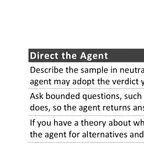
The frameworks also help you develop and stress-test your own product strategy through interactive conversations. The AI applies practitioner knowledge to challenge your assumptions about pricing, positioning, and go-to-market readiness. Below is a simulated conversation to demo such capabilities. You can open it in a new tab.
Codified Strategy Expertise
To help you conduct such analysis, my MCP server provides capabilities that help your AI agent reason through the analysis in a structured, methodical way:
- Strategy creation from your context: Your AI receives frameworks for building a product strategy that adapts to your company’s stage and situation. It covers market positioning, capabilities, pricing, sales motions, delivery, trust, and team planning.
- Constructive feedback on strategy drafts: Your AI evaluates an existing plan against specific criteria, including pricing-positioning alignment, go-to-market readiness, trust gaps, and team expertise.
- Multi-company competitive analysis: Your AI receives structured comparison frameworks with scoring rubrics for evaluating competitors, market segments, or investment cohorts side by side.
- Defensibility scoring against AI-era commodity pressure: Your AI applies Ben Vierck’s seven-dimension rubric, included with his permission, alongside my cybersecurity-specific take on threat-data flywheels, mandated procurement, and adversarial pressure.
- Topic-specific strategic guidance: Your AI receives focused guidance when you need depth on a single area, such as pricing models, compliance readiness, competitive moats, or platform strategy.
The MCP server is designed to preserve confidentiality. Your AI agent doesn’t send your documents or proprietary details to my server, and the server doesn’t log conversation contents.
How to Connect Your AI Tool
To give your AI tool access to these security product frameworks, point it at my MCP server https://website-mcp.zeltser.com/mcp. For example, run this command for Claude Code:
claude mcp add zeltser-website --transport http https://website-mcp.zeltser.com/mcp --scope userOf course, the MCP server also works with Claude Desktop and other MCP-compatible tools. (By the way, the same server provides incident response writing guidance and text search across my website’s security content.)
If you prefer to build your own tooling that incorporates my security product guidance, you can download my product insights as a YAML file, which your software can parse locally and use in a way that fits your needs. If you want to codify your own domain expertise for AI consumption, the MCP Expertise Toolkit that powers this server provides a template for building your own.
Key Takeaways
- The frameworks test whether the company’s pricing, positioning, and go-to-market actually support each other, whether you’re evaluating your own strategy or someone else’s.
- You can sort competitive claims by evidence quality, separating verified capabilities from marketing language when assessing vendors, competitors, or investment targets.
- Guidance adjusts to the company stage and draws on vertical market analysis when possible.
- Your strategy data stays local and isn’t sent to my MCP server to preserve confidentiality.